Schengen Information System - NEMZETI ADATVÉDELMI ÉS INFORMÁCIÓSZABADSÁG HATÓSÁG
Főmenü:
- Főoldal
- GDPR EU adatvédelmi reform
- KERESÉS
- ONLINE Bejelentő Rendszerek
- KKV HOTLINE
- Adatvédelmi hatásvizsgálati szoftver
- ÜGYFÉLSZOLGÁLAT, KAPCSOLAT
-
Közérdekű adatok
-
1. Szervezeti, személyzeti adatok
- 1.1 Kapcsolat, elérhetőség
- 1.2 Szervezeti felépítés
- 1.3 Szervezet vezetői
- 1.4 Ügyfélszolgálati adatok
- 1.5 Testületi szerv adatok
- 1.6 Irányított szervek
- 1.7 Gazdasági társaságok
- 1.8 Közalapítványok
- 1.9 Alapított szervek
- 1.10 Lapok
- 1.11 Felettes, felügyeleti, törvényességi ellenőrzést gyakorló szervek
-
2. Tevékenységre, működésre vonatkozó adatok
- 2.1 A szerv alaptevékenysége, feladat- és hatásköre
- 2.2 Tevékenység tájékoztató
- 2.3 Helyi Önkormányzat feladatai
- 2.4 A hatósági ügyek intézésének rendje
- 2.5 Közszolgáltatások
- 2.6 A szerv nyilvántartásai
- 2.7 Nyilvános kiadványok
- 2.8 Testületi szerv döntéshozatal, ülések
- 2.9 A szerv döntései, koncepciók, tervezetek, javaslatok
- 2.10 Hirdetmények
- 2.11 Pályázatok
- 2.12 Alaptevékenységgel kapcsolatos vizsgálatok
- 2.13 Közérdekű adatok igénylésének rendje
- 2.14 Statisztikák jogszabály alapján
- 2.15 Statisztikák közérdekű adatokról
- 2.16 Közérdekű adatok hasznosítási szerződései
- 2.17 Közérdekű adatok felhasználási feltételei
- 2.18 Egyedi közzétételi listák
- 2.19 Közadat újrahasznosítás tájékoztatás
- 2.20 Közadat újrahasznosítási szerződési feltételek
- 2.21 Közadat újrahasznosítási díjszabás
- 2.22 Közadat újrahasznosítási jogorvoslat
- 2.23 Közadat újrahasznosítási szerződések
- 2.24 Közadat digitalizálási megállapodások
- 2.25 Közadatra vonatkozó szervezeti szabályzók
- 3. Gazdálkodási adatok
- Közadatkereső
- Adatkezelési tájékoztatók, egyéb szabályzatok
- Szervezeti és Működési Szabályzat
- A közérdekű adatigénylés szabályai
- A közérdekű bejelentés szabályai
- NAIH éves beszámolói
- Vagyonnyilatkozatok
- Önéletrajzok
-
1. Szervezeti, személyzeti adatok
-
Határozatok, közlemények, állásfoglalások
- Hatósági határozatok / végzések
- Tájékoztató az adatvédelmi hatósági eljárásokról
- Közigazgatási határozat bírósági felülvizsgálata
- Jogi szabályozással kapcsolatos állásfoglalások
- Tájékoztatók, közlemények
- Jogszabályok
- Nemzetiségeknek szóló tájékoztató
- Ajánlások
- Adatvédelmi állásfoglalások, jelentések
- Adatvédelmi szótár
- BAFK előadások anyagai
- KRE adatvédelmi konferencia előadásai
- Információszabadság állásfoglalások, közlemények
- Külföldi adattovábbítás
- Kötelező erejű vállalati szabályok (BCR)
- Adatvédelemről fiataloknak "kulcs a net világához" projekt
-
In English
- General Information
- Annual Reports
- List of Processing Operations Subject to DPIA 35(4) GDPR
- Freedom of Information in Hungary
- "ARCADES" Project
- Cooperation Workshop
- Key to the world of the net!
- Act CXII of 2011 ("Privacy Act")
- Schengen Information System
- Europol
- Customs Information System - CIS
- European Dactyloscopy System - EURODAC
- Visa Information System - VIS
- Internal Market Information System - IMI
- CV President
- CV Vice President
- NEWS
- Archive website for data protection commissioner (1995-2011)
-
Nemzetközi ügyekhez kapcsolódó információk
- Schengeni Információs Rendszer
- EUROPOL
- TFTP
- Vámügyi Információs Rendszer (CIS)
- EURODAC rendszer
- Vízuminformációs Rendszer (VIS)
- Belső Piaci Információs rendszer (IMI)
- IWGDPT Munkadokumentumok
- Nemzetközi Adatvédelmi Konferencia
- 29- Adatvédelmi Munkacsoport dokumentumai
- Az amerikai Szövetségi Kereskedelmi Bizottság jelentése
- Álláspályázat
- Adatvédelmi Biztos Irodájának Archívuma
- EKOP 1.1.7 Projekt
- Egyéb projektek
Schengen Information System
The Schengen Area
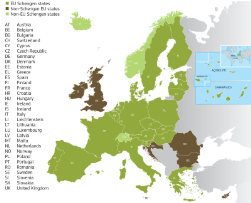
The free movement of persons is a fundamental right guaranteed by the EU to its citizens. It entitles every EU citizen to travel, work and live in any EU country without special formalities. Schengen cooperation enhances this freedom by enabling citizens to cross internal borders without being subjected to border checks. The border-
Today, the Schengen Area encompasses most EU States, except for Bulgaria, Croatia, Cyprus, Ireland, Romania and the United Kingdom. However, Bulgaria and Romania are currently in the process of joining the Schengen Area. Of non-
The Schengen provisions abolish checks at the Union's internal borders, while tightening controls at the external borders, in accordance with a single set of rules.
What is the Schengen Information System?
The Schengen Information System (SIS) is the most widely used and largest information sharing system for security and border management in Europe. SIS enables competent national authorities such as the police and border guards, to enter and consult alerts on persons or objects. SIS is in operation in 30 European countries, including 26 EU Member States (only Ireland and Cyprus are not yet connected to SIS) and 4 Schengen Associated Countries (Switzerland, Norway, Liechtenstein and Iceland).
EU Member States with special arrangements:
Bulgaria, Romania and Croatia are not yet part of the area without internal border checks (the 'Schengen area'). However, since August 2018, Bulgaria and Romania started using fully SIS. A Council Decision is still required for the lifting of checks at the internal borders of these two Member States. In the case of Croatia, there are still some restrictions regarding its use of Schengen-
wide SIS alerts for the purposes of refusing entry into or stay in the Schengen area. Those restrictions will be lifted as soon as Croatia has become a part of the area without internal border checks.
The United Kingdom operates SIS but, as it has chosen not to join the Schengen area, it cannot issue or access Schengen-
wide alerts for refusing entry and stay into the Schengen area.
Ireland and Cyprus are not yet connected to SIS. Ireland is carrying out preparatory activities to connect to SIS, but, as is the case for the UK, it will not be able to issue or access Schengen-
wide alerts for refusing entry or stay. Cyprus has a temporary derogation from joining the Schengen area and is not yet connected to SIS.
An SIS alert does not only contain information about a particular person or object but also instructions for the authorities on what to do when the person or object has been found. The national SIRENE Bureaux located in each participating country serve as single points of contact for the exchange of supplementary information and coordination of activities related to SIS alerts.
On 9th April 2013 a more up-
A designated authority in each participating country has the responsibility for the operation of its section of the SIS. The N-
Should relevant information need to be transferred through the system, another authority acts as the central network exchange, SIRENE (Supplementary Information Request at National Entry) between the state and other cooperating countries. In Hungary SIRENE Bureau is part of the International Law Enforcement Cooperation Centre (Hungarian National Police Headquarters).
In June 2018, the co-
The changes will entail enhancements in the following areas:
Biometrics: SIS will contain palm prints, fingerprints, facial images and DNA concerning, for example, missing persons to confirm their identity.
Counter-
terrorism: More information will be shared on persons and objects involved in terrorism-related activities, allowing the authorities of the Member States to better pursue and prevent serious crimes and terrorism.
Vulnerable persons: Competent authorities will have the possibility of entering preventive alerts in the system to protect certain categories of vulnerable persons (missing persons, children at risk of abduction or potential victims of trafficking in human beings or gender-
based violence).
Irregular migration: Return decisions and entry bans will be part of the information shared in the system to enhance their effective enforcement.
Enhanced access for EU Agencies: Europol will now have access to all alert categories in the SIS while the European Border and Coast Guard Agency operational teams will be able to access SIS for the purpose of carrying out their tasks in the hotspots.
Moreover, the introduction since March 2018 of an AFIS (Automated Fingerprint Identification System) in SIS, and the resulting possibility of making searches using fingerprints, makes it even more difficult for criminals to move unnoticed across Europe.
Who is affected and what types of data are stored in the SIS?
The type of personal data stored in the Schengen Information System is defined by the Regulation (EC) No 1987/2006 of the European Parliament and of the Council of 20 December 2006 on the establishment, operation and use of the second-
Participating states may only collect data on:
persons wanted for arrest in surrender or extradition procedure
non-
nationals for whom an alert has been issued for the purpose of refusing entry into the Schengen area missing persons, persons who need to be placed under protection
witnesses or persons summoned to appear before judicial authorities in connection with a criminal matter, or those who are to be served with a criminal judgment or custodial sentence
persons under discreet surveillance or specific checks
documents, vehicles other objects specified in the legislation (firearms, boats, and identity documents), which are to be seized or used as evidence
It should be noted that personal data in the SIS may not pertain to one’s racial background, political, religious or other beliefs, health status or sex life.
Functionalities of the SIS II:
Enhanced alerts on persons and objects: persons, vehicles, firearms, issued documents, blank documents, bank notes.
New categories of alerts: stolen aircrafts, boats, boat engines, containers, industrial equipment, securities and means of payment.
Direct queries in the central system.
Linking of alerts on persons, objects & vehicles (e.g.: alert on a person and a vehicle).
Biometric data (fingerprints and a photograph).
European Arrest Warrant attached directly to alert for persons wanted for arrest for surrender or extradition.
Information on misused identity preventing the misidentification.
Notations regarding specific objects may be made in the SIS, provided such items were forfeited or presented as evidence in criminal proceedings. Alerts may concern lost, stolen, misappropriated or invalidated
Who may use SIS data within participating states?
Each member state submits a list of competent institutions which are authorized to use data stored in the SIS to an EU Commission executive committee. The system can be accessed locally by a variety of approved authorities. Access is instant and direct.
Police, for example, may obtain SIS information for the purpose of protecting the legal order, national security or during the course of a criminal investigation.
Data that pertains to a refusal of entry into the Shengen zone, as well as specified types of lost, stolen or misappropriated goods may be accessed by:
authorities responsible for issuing visas
central authorities responsible for examining visa applications
authorities responsible for issuing residence permits
authorities responsible for the administration of legislation on aliens
Institutions in member states who are responsible for the issuance of vehicle registration certificates may also have access to data on stolen, misappropriated or invalidated vehicle registration certificates and license plates.
Your Data Protection Rights and the SIS
In order to understand your data protection rights vis-
The European Data Protection Supervisor shall check that the personal data processing activities in the eu-
The National Supervisory Authorities and the European Data Protection Supervisor shall cooperate actively and ensure coordinated supervision of SIS II. They shall meet at least twice a year. For the sake of transparency, a joint report of activities shall be sent to the European Parliament, the Council and eu-
At the national level each signatory nation has a data protection authority that is tasked with the oversight of national data control issues. In Hungary, the independent office of the National Authority for Data Protection and Freedom of Information performs this function.
In accordance with EU and Hungarian laws, each person has the right to:
access SIS-
stored information related to the person request that inaccurate or false data is corrected
request the removal of its unlawfully processed data
turn to the courts or another competent authority to request the correction or removal of inaccurate data or petition for compensatory damages
In Hungary, anyone who is interested in knowing whether or not their data has been recorded in the SIS, or wishes to correct or have inaccurate data deleted should contact any government office, police station or any Hungarian Embassy or Consulate and fill in a request for information form which is transferred to the SIRENE Bureau of the Hungarian National Police Headquarters:
SIRENE Bureau
Address: 1139 Budapest, Teve u. 4-
Tel. : +36 (1) 443-
Fax : +36 (1) 443-
E-
Form for requesting information on the basis of Art. 26 of the Act CLXXXI of 2012 on the exchange of information in the framework of the second-
The SIRENE Bureau has the right to refuse requests but is obliged to inform the person about the fact of and the reason for denial. Should you find that the SIRENE Bureau is not adequately responsive to your request, you then may turn to the Hungarian National Authority for Data Protection and Freedom of Information:
National Authority for Data Protection and Freedom of Information
Postal address: 1530 Budapest, Pf.: 5.
Office address: 1125 Budapest, Szilágyi Erzsébet fasor 22/C.
Tel: +36 1 391-
Fax: +36 1 391-
Email: ugyfelszolgalat@naih.hu
Web: https://naih.hu